Erskine Childers
Irish nationalist and author (1870-1922)
1870–1922, born in Mayfair
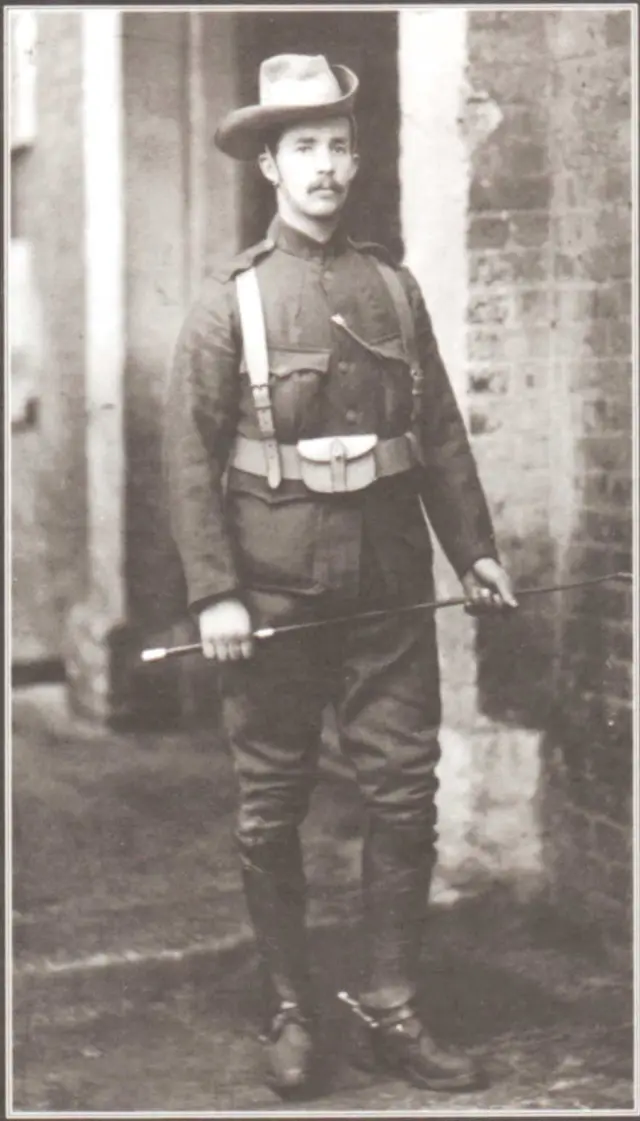
- Born
- 25 June 1870
- Birthplace
- Mayfair
- Died
- 24 November 1922
From their work
Being shot with volcanic suddenness into the Navy at an hour's notice is a queer experience, but I am beginning to get used to the life and to forget that I ever had a moustache or a tweed suit.
Read the opening of The Riddle of the Sands · about 3 min
I have read of men who, when forced by their calling to live for long periods in utter solitude—save for a few black faces—have made it a rule to dress regularly for dinner in order to maintain their self-respect and prevent a relapse into barbarism. It was in some such spirit, with an added touch of self-consciousness, that, at seven o’clock in the evening of September 23 in a recent year, I was making my evening toilet in my chambers in Pall Mall. I thought the date and the place justified the parallel; to my advantage even; for the obscure Burmese administrator might well be a man of blunted sensibilities and coarse fibre, and at least he is alone with nature, while I—well, a young man of condition and fashion, who knows the right people, belongs to the right clubs, has a safe, possibly a brilliant, future in the Foreign Office—may be excused for a sense of complacent martyrdom, when, with his keen appreciation of the social calendar, he is doomed to the outer solitude of London in September. I say “martyrdom”, but in fact the case was infinitely worse. For to feel oneself a martyr, as everybody knows, is a pleasurable thing, and the true tragedy of my position was that I had passed that stage. I had enjoyed what sweets it had to offer in ever dwindling degree since the middle of August, when ties were still fresh and sympathy abundant. I had been conscious that I was missed at Morven Lodge party. Lady Ashleigh herself had said so in the kindest possible manner, when she wrote to acknowledge the letter in which I explained, with an effectively austere reserve of language, that circumstances compelled me to remain at my office. “We know how busy you must be just now”, she wrote, “and I do hope you won’t overwork; we shall _all_ miss you very much.” Friend after friend “got away” to sport and fresh air, with promises to write and chaffing condolences, and as each deserted the sinking ship, I took a grim delight in my misery, positively almost enjoying the first week or two after my world had been finally dissipated to the four bracing winds of heaven. I began to take a spurious interest in the remaining five millions, and wrote several clever letters in a vein of cheap satire, indirectly suggesting the pathos of my position, but indicating that I was broad-minded enough to find intellectual entertainment in the scenes, persons, and habits of London in the dead season. I even did rational things at the instigation of others. For, though I should have liked total isolation best, I, of course, found that there was a sediment of unfortunates like myself, who, unlike me, viewed the situation in a most prosaic light. There were river excursions, and so on, after office-hours; but I dislike the river at any time for its noisy vulgarity, and most of all at this season. So I dropped out of the fresh air brigade and declined H——’s offer to share a riverside cottage and run up to town in the mornings. I did spend one or two week-ends with the Catesbys in Kent; but I was not inconsolable when they let their house and went abroad, for I found that such partial compensations did not suit me. Neither did the taste for satirical observation last. A passing thirst, which I dare say many have shared, for adventures of the fascinating kind described in the _New Arabian Nights_ led me on a few evenings into some shady haunts in Soho and farther eastward; but was finally quenched one sultry Saturday night after an hour’s immersion in the reeking atmosphere of a low music-hall in Ratcliffe Highway, where I sat next a portly female who suffered from the heat, and at frequent intervals refreshed herself and an infant from a bottle of tepid stout.
Read the whole book free on Project Gutenberg Beautifully formatted edition on Standard Ebooks
Quotes from Wikiquote (CC BY-SA 4.0). Texts of this author are in the public domain in the UK.